
Bot twitch en Python
Dans ce tuto je vais essayé de vous montrer comment créer un chat bot en python pour twitch.
Procedure configuration de Twitch
Rendez vous sur la console d'application twitch et ajouter une application. Renseigner :
- url de redirection : https://twitchtokengenerator.com
- catégorie : Chat Bot
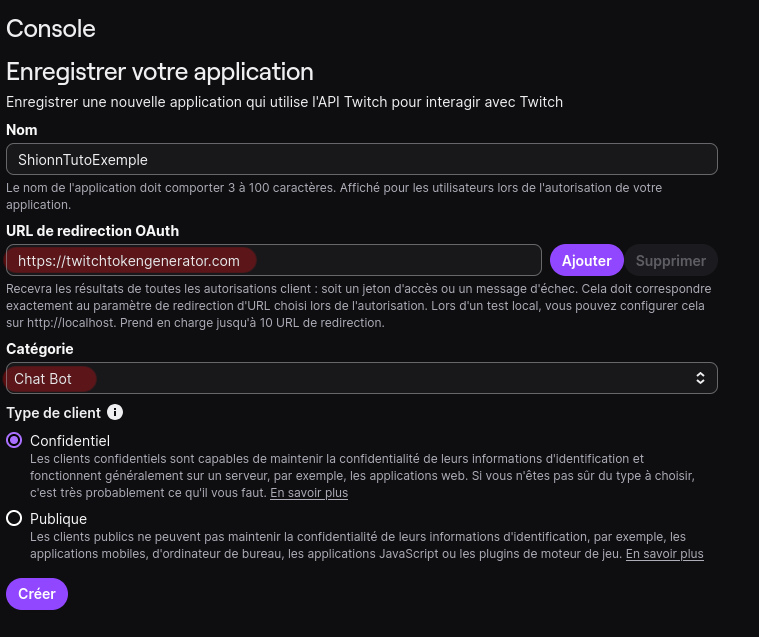
Creer le bot. Puis de retour à la liste, editer le en cliquant sur Gérer. Puis cliquer sur Nouveau Secret. Vous trouvez ici le Client ID et Client Secret.
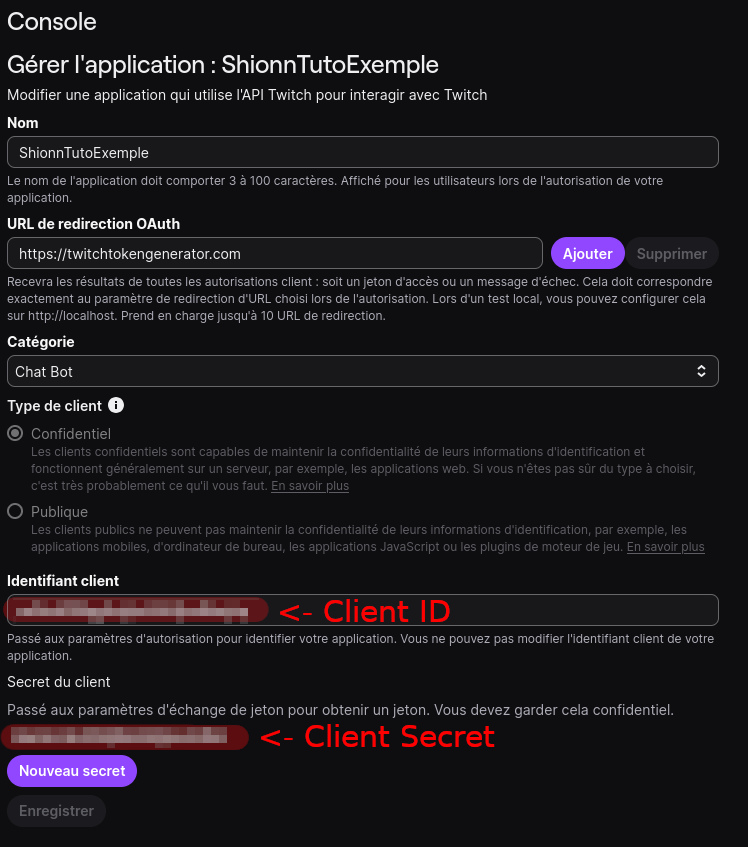
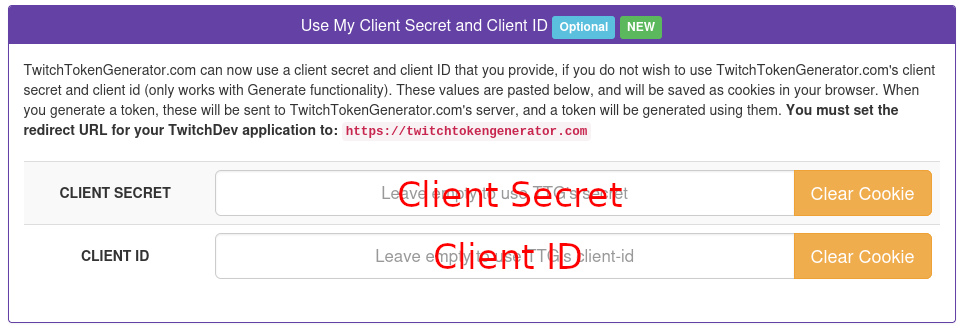
Ensuite rendez vous sur twitchtokengenerator.com et selectionner Custum Scope Target. Dans la section Use My Client Secret and Client ID, renseigner les deux champs.
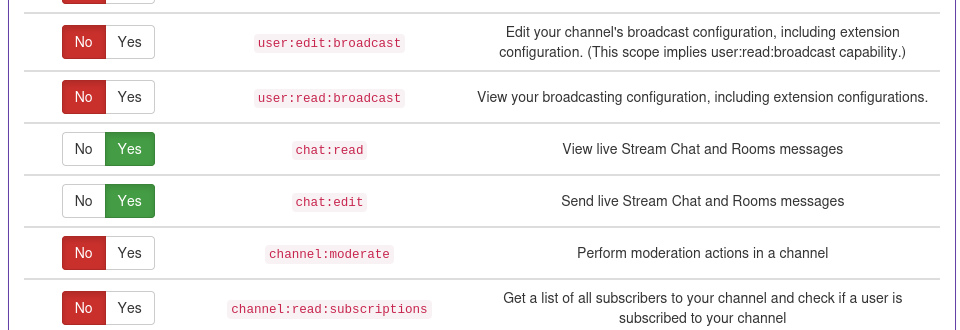
Ensuite dans la section Available Token Scopes, cocher chat:read et chat:edit. Puis, dans la même section, cliquer sur Generate token.
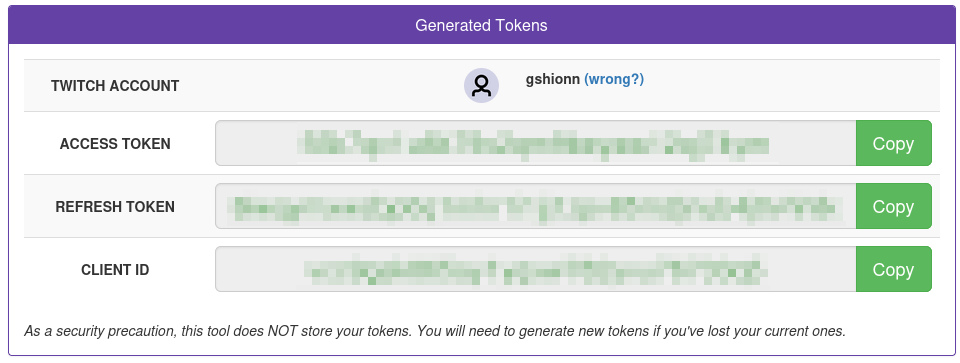
Suivez la procédure et vous avez votre Access Token et Refresh Token.
Code
J'utilise la lib python twitchAPI.
pip install twitchAPI
Je passe pas trop de temps sur le code c'est surtout les clefs d'api qui sont chiante à avoir.
import asyncio

from twitchAPI.twitch import Twitch
from twitchAPI.type import AuthScope, ChatEvent
from twitchAPI.chat import Chat, ChatEvent, ChatMessage, EventData


CLIENT_ID='<Votre Client ID>'
CLIENT_SECRET='<Votre Client Secret>'
ACCESS_TOKEN='<Votre Access Token>'
REFRESH_TOKEN='<Votre Refresh Token>'

SCOPES = [AuthScope.CHAT_READ, AuthScope.CHAT_EDIT]

CHANNEL='#<Canal twitch à rejoindre>'

async def on_ready(ready_event: EventData):
	print('Le bot est connecté au chat')
	await ready_event.chat.join_room(CHANNEL)

async def on_message(msg: ChatMessage):
	print(f'{msg.user.name} dis: {msg.text}')

async def hello_command(cmd: ChatMessage):
	await cmd.reply(f'Bonjour {cmd.user.name}')

async def start() :
	twitch = await Twitch(CLIENT_ID, CLIENT_SECRET)
	await twitch.set_user_authentication(ACCESS_TOKEN, SCOPES, REFRESH_TOKEN)
	chat = await Chat(twitch)
	chat.register_event(ChatEvent.READY, on_ready)
	chat.register_event(ChatEvent.MESSAGE, on_message)
	chat.register_command('hello', hello_command)
	chat.start()

if __name__ == "__main__":
	asyncio.run(start())